




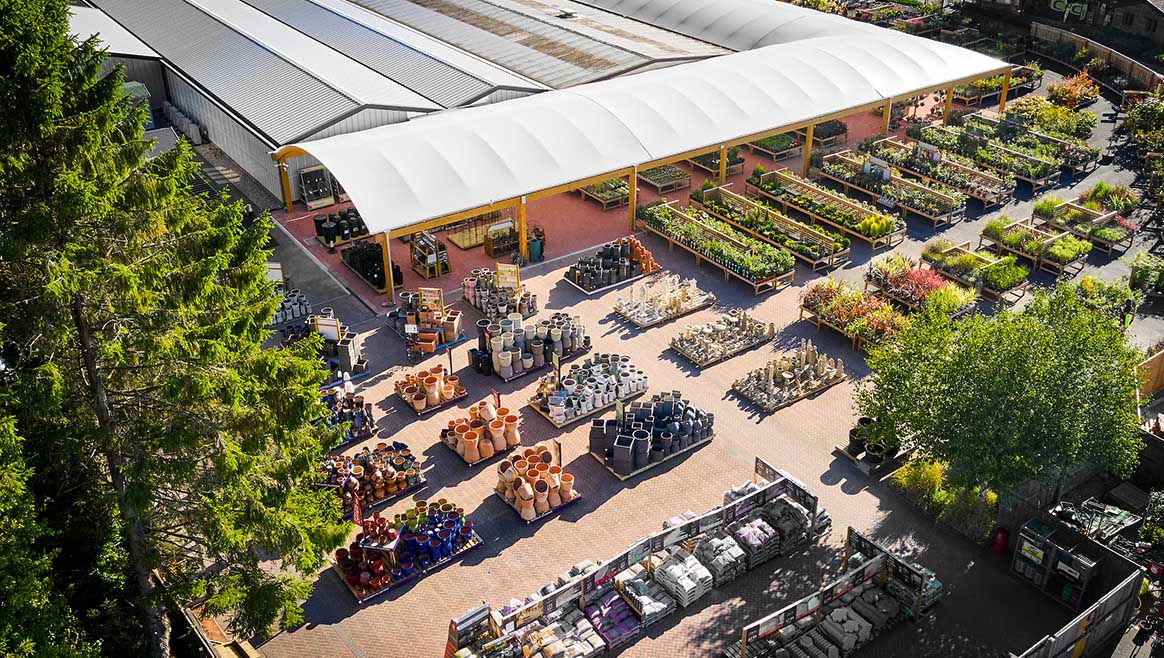


At Hillier Garden Centres, caring for the environment is at the heart of everything we do.
Table of Contents
As pioneers in British horticulture, we continually refine our practices to protect natural resources and reduce our impact. From cutting our carbon footprint to conserving water, adopting renewable energy and using responsible growing methods, we take measurable action across every part of our business.
We recognise that sustainability is an ongoing journey. Alongside the progress already made, we have set ambitious pledges for the future to ensure we remain at the forefront of sustainable horticulture and environmental responsibility.
Gardening itself brings many benefits to the planet, from increasing tree cover to creating thriving habitats for wildlife. Yet we know there is always more to achieve. That is why we continue to challenge ourselves and our industry to innovate and lead with integrity.
Measuring and Reducing Our Carbon Footprint
To track and improve our environmental performance, Hillier Nurseries became Planet Mark-certified in 2018.
Learn more about our Planet Mark certification.
Planet Mark is an independent programme that helps organisations measure and reduce carbon emissions, energy and water use, waste and more. This partnership enables us to identify new opportunities to cut our impact year-after-year.
Our pledge: Reduce our carbon footprint by at least 5% every year.
Key Actions and Progress
Carbon-Sequestering Plants and Trees
- Growing and supplying plants and trees naturally locks away carbon and enriches the environment.
- On our field tree nursery sites, we maintain grassed paths and headlands to act as a carbon sink and improve soil stability.
Renewable Energy and Efficient Operations
- Solar power: Solar panels are now installed at seven garden centres – Marlow, Weyhill, Aldermaston, Sunningdale, Three Legged Cross, Newbury and Eastbourne – further helping to offset our electricity use.
- LED lighting: Our Hillier Support Centre and garden centres in Eastbourne, Botley, and Winchester have already switched to energy-saving LED lighting, with all other centres scheduled to follow.
- Green electricity: All Hillier electricity is supplied by REGO-certified renewable energy providers, ensuring our power comes from sustainable sources.
- Heating upgrades: Hillier Garden Centre Newbury now uses reverse-cycle electric heating and cooling, powered by solar energy. At Three Legged Cross, 90% of the roofing has been upgraded with 100mm insulated panels to improve energy efficiency.

Lower-Emission Transport
- We continue to introduce hybrid and electric vehicles to our fleet.
- EV charging is available at our Support Centre and Newbury, with plans to expand to more sites when infrastructure delays are resolved.
Responsible Sourcing and Waste Reduction
- Around 92% of outdoor plants sold in our centres are British grown, lowering transport miles, and supporting sustainable UK growers.
- Additional recycling streams are in place across the business to minimise landfill waste.
Tracking Scope 1, 2 and 3 Emissions
- We have measured Scope 1 and Scope 2 carbon emissions since 2018.
- In 2024 we began reporting Scope 3 emissions, which represent the largest share of a company’s footprint. We are now working closely with our supply chain to reduce these indirect emissions.
Innovative Initiatives
- Trolley jackets: To reduce single-use plastic wrap, reusable trolley jackets are now in place at Horsham, Newbury, Braishfield, Weyhill, Eastbourne, Botley, Three Legged Cross and Lechlade. Further expansion is planned for 2026.
External Partnerships, Accreditations & Awards
To hold ourselves accountable and improve our environmental performance, we partner with respected external bodies and participate in certification schemes. These help us benchmark, track, and raise our standards continually.
| Year | Accreditation / Award | What it means for Hillier |
| 2018 | Planet Mark | A sustainability certification that supports measurement of carbon, water and waste, and encourages ongoing improvement. |
| 2019 | ISO 14001 (Environmental Management System) | Globally recognised standard. Confirms that our operations follow an agreed framework for reducing environmental impact. Hillier Nurseries achieved the accreditation again in 2024, marking continuity in our EMS credentials. |
| 2019 | Woodland Trust UK Sourced & Grow Assurance Scheme (UKSG) | Hillier was the first UK ornamental tree nursery to secure this. verifying strong biosecurity credentials and plant provenance. |
| 2022 | BALI Accredited Supplier (British Association of Landscape Industries) | Inclusion affirms Hillier as a professional, trusted supplier for landscape contractors and designers. |
| 2024 | Pro Landscaper Sustainability & Biodiversity Award – “Sustainability Supplier of the Year” | Recognises our supply practices, certification portfolio, and the embedding of sustainability and biodiversity in our operations. |
Recent Additions & Internal Measures
- Plant Healthy Scheme: We have an internal Plant Health Assurance programme; Hillier is audited and certificated under the DEFRA-backed Plant Healthy scheme to ensure responsible plant sourcing and biosecurity.
- Re-certification & ongoing audits: Our ISO 14001 accreditation is maintained through regular audit cycles.
- Proof in practice: Awards such as the Pro Landscaper Sustainability & Biodiversity Awards showcase how these accreditations translate into real-world impact.

Plastic Reduction: Minimising Waste, Maximising Impact
We recognise the urgency of reducing plastic, especially single-use variants, and are committed to cutting down wherever possible. Our approach combines innovation, responsible sourcing, and progressive trial programmes.
Driving Sustainable Waste Management Since 2018
Since 2018, we’ve made significant strides in recycling across our Garden Centres, Nurseries, and Support Centre, thanks to our strategic partnership with BIFFA. In alignment with the UK government’s new Simpler Recycling legislation, we’ve expanded our recycling efforts by introducing dedicated streams for food waste, glass, and mixed materials including paper, cardboard, and plastic within our office environments.
This enhanced recycling initiative underscores our long-standing commitment to sustainability and reducing landfill waste. By leveraging the BIFFA customer portal, we monitor and report our annual recycling performance with precision, data that contributes to our environmental certification through Planet Mark.
Recyclable & Non-Black Plant Pots
- In Spring 2019, our nurseries were among the first in the UK to switch to kerbside recyclable, non-black (taupe) plant pots, making it easier for customers to recycle.
- These taupe pots are now in wide use across our garden centres.
- The change was pioneering due to the known challenges in recycling black plastic pots, which often contain carbon black pigment that disrupts infra-red sorting systems.
Recycling & End-of-Life Materials
Since 2018, across our Garden Centres, Nurseries, and Support Centre, we have significantly increased our recycling volumes through a partnership with BIFFA. In response to the new government ‘Simpler Recycling’ legislation, we have introduced additional recycling streams in our offices, now separating and recycling food waste, glass, and mixed materials (paper, card, and plastic). This initiative reflects our ongoing commitment to reducing waste sent to landfill.
Through the BIFFA customer portal, we can accurately track our annual recycling performance, which we report to the Planet Mark.
- On our nurseries, all waste plastic pots, polytunnel skins (after 5–10 years), delivery trolley wraps, and compost bags are reclaimed and recycled.
- In our restaurants, disposable cups, lids and straws have been replaced with plant-based compostable alternatives, made from materials such as corn, sugar cane and trees.
- All adult soft drinks we sell are in glass bottles, which are collected and recycled at every centre.
- Our Hillier-brand bird food now comes in fully recyclable plastic packaging.
- Working with our greeting card suppliers, we have eliminated plastic packaging from our card range. 100% of Christmas cards no longer use plastic wrapping.
- We have trialled reusable trolley jackets (to protect plants during transport) in several centres; this helps reduce plastic shrink-wrap usage and will be gradually rolled out across the group.

Advanced Water Management & Climate-Controlled Production
At Hillier, precision water management and climate control are central to our mission of sustainable horticulture. Our nursery operations combine innovative systems, automation and ecological practices to optimise resource use and support resilient plant production.
Water Management Systems & Efficiency
- Rainwater harvesting & filtration: We collect rainwater across our roofs and connect it via advanced piping to storage tanks. Water passes through centrifugal and sand filtration systems, then undergoes chlorine dioxide sterilisation and controlled acidification to ensure optimal water quality for cultivation.
- Maximising irrigation efficiency:
- Sloped beds and capillary mats help channel moisture directly into the plant root zone.
- Recirculation systems capture and reuse unused water, reducing waste.
- These combined methods make our irrigation up to 60 % more efficient than conventional watering systems.
- In external industry guidelines, efficient systems (drip, capillary matting, controlled recirculation) can reduce water use by large margins compared to hand watering.
Climate-Controlled Cultivation: The Folie House
- The Folie House is a climate-proof structure designed for consistent, year-round production: early crop starts, protection from extreme weather and improved crop quality.
- Environmental controls are computer-driven, leveraging sensors that monitor soil moisture, humidity and ambient temperature.
- Automated ventilation, heating and humidity systems respond dynamically to conditions, ensuring optimal growing environments.
- Biological pest control is standard inside, including beneficial insects with close monitoring. Outside, chemical interventions are strictly limited.
Automation, Robotics & Data-Driven Control
- We are trialling automated irrigation systems and robotics to move goods and control water delivery.
- These trials aim for hands-off, data-driven operation, reducing labour, human error and resource waste.
- Advanced systems in research (e.g. IoT and AI in irrigation) show promise: Optimising water delivery by integrating sensor data with predictive models.
Biodiversity, Habitat & Materials
- The nursery is rich in wildlife, an indicator of ecosystem health. We actively protect protected species and fragile habitats across the site.
- Sustainable materials are used where possible: Recycled aggregates for paths, reclaimed structures, sustainable polymers, etc.
- We plan and maintain wildflower margins and habitat strips to boost beneficial insects, pollinators and ecological balance.
- Provisions for solar power are built into new infrastructure and retrofit plans.
Challenges & Continuous Adaptation
We face natural tensions between operational demands and environmental goals:
- Heating & energy demand remains one of the largest cost and carbon drivers, especially during cold months.
- Water supply vs demand: Balancing capacity, storage, and fluctuations in rainfall requires continual vigilance.
- Pest management: We juxtapose biological methods with minimal chemical interventions when necessary.
- Ongoing monitoring, testing, and feedback loops ensure we adapt systems over time, calibrate controls, and invest in effective new technologies.

Removing Peat: A Thoughtful Transition to Cleaner Growing Media
We are unwavering in our commitment to eliminate peat from every corner of our business. However this must be done carefully, as replacing peat with suboptimal materials would simply shift the environmental burden elsewhere.
100% Peat Free Tree Production & Nursery Operations
- As the UK’s largest grower of semi-mature trees, Hillier achieved 100% peat free status for all our tree production many years ago.
- Across all our nurseries, we ceased use of conventional peat, and every Hillier plant is potted in peat free growing media.
- We launched the Hillier Peat Free Multipurpose Compost in 2020, and since 2022 have expanded our portfolio of peat-free products while working with suppliers to reduce peat content in existing lines.
The Challenges & Innovations of Going Peat Free
Transitioning away from peat does not come without technical hurdles:
- Peat free media often has uneven water distribution, demanding new irrigation strategies, especially early after potting.
- Monitoring becomes more complex: Pot weight is no longer a reliable indicator of moisture content.
- We use probes and data loggers to oversee moisture, temperature and media behaviour, refining our feed and wetting agent strategies in response to those insights.
We also leaned into industry collaboration, as a member of the RHS Peat-Free Fellowship, we share and trial new media innovations, as well as grow our collective understanding under the guidance of the Department for Environment, Food & Rural Affairs.
Discover our peat free hub of information for expert tips and tricks.
Why Our Approach Matters
- Peat harvesting destroys unique ecosystems and releases long-stored carbon back into the atmosphere.
- Our substitute media, a blend of bark, wood fibre (such as sylva fibre), and composted green waste, is sustainable and locally sourced.
- The result: Lighter plants, no shrinkage on drying, better drainage, and healthy oxygenated roots.
- Because we lead the transition, our experience supports both our own resilience and provides a model for the wider horticultural industry.
Neonicotinoids & Responsible Chemical Use
At Hillier, we prioritise a natural-first approach to gardening and growing. While chemical controls sometimes have a role, we restrict their use, favouring biological, ecological and low-impact solutions whenever possible.
Our Approach & Prohibitions
- On our nurseries, we do not use neonicotinoids in managing crops.
- Since 2018, our garden centres do not sell any products containing neonicotinoids.
- All our UK plant suppliers commit to not using neonicotinoids in their growing operations.
Integrated Crop Management (ICM)
We embed Integrated Crop Management (ICM) practices to reduce reliance on synthetic chemicals:
- Environmental and biological controls are the first lines of defence, encouraging beneficial predators, parasites and other natural pest checks.
- When chemical interventions are necessary, we choose lower-impact formulations and apply them precisely, only as a last resort.
- On our tree nurseries, we minimise artificial fertilisers by using organic inputs:
- Spreading farmyard manure.
- Cultivating cover crops (such as grass, clover, mustard, and marigolds).
- Marigolds are especially helpful because root-associated nematodes can thrive naturally, reducing the need for chemical soil sterilisation.
The Policy Landscape & Why This Matters
- The UK government has committed to ending the use of neonicotinoid pesticides known to pose risk to pollinators, specifically clothianidin, imidacloprid and thiamethoxam.
- These substances have been under increasing regulatory pressure globally, due to documented harm to bees and non-target invertebrates.
- In this shifting regulatory environment, our policy aligns not only with best practice but safeguards pollinators, soil health, water quality and biodiversity.

Water Use & Water Conservation
At Hillier, efficient water management is core to our sustainable horticulture strategy. Through long-standing infrastructure, modern sensors, and innovation in our growing facilities, we are steadily lowering dependence on mains water and improving water stewardship across our nurseries and new production houses.
Reservoirs, Rainwater Harvesting & Self-Sufficiency
- Since the late 1980s, we have relied on our own reservoir systems to collect rainwater and irrigation runoff. These systems are filtered, cleaned and treated on-site so that the water meets the standards needed for healthy plant growth.
- At our Broadmead container tree nursery, for example, we collect rainwater from a nearby housing estate to feed into reservoirs for use on crops.
- Thanks to these efforts, our nurseries currently achieve approximately 85% water self-sufficiency, greatly reducing reliance on mains water.
Precision Irrigation & Automation
- Hillier has introduced precision irrigation systems that target water directly to the root zones of plants (e.g. drip methods for containers) thereby minimising waste from evaporation and runoff.
- In our new facility (often referred to as the “Folie House” or new state-of-the-art growing structure), advanced irrigation technology is being used:
- Capillary flooring to water from below once plants are established.
- Sprinkler systems for crop establishment, tied into environmental controls.
- The system is designed so that in future, soil moisture probes will trigger automated irrigation.
- We also use sensors such as evapotranspiration sensors and wireless moisture probes, to inform when and how much irrigation is needed. These systems link to weather forecast models to avoid overwatering.

Folie House / New Climate-Controlled Structure
- The Folie House (new growing structure) spans 1.2 hectares, built for reliable, year-round production. It is designed for robustness to weather extremes: High roof venting capacity (≈45%) for cooling, ability to close to retain warmth, adjustable shade screens tied to light levels.
- Environmental controls include computers regulating ventilation, temperature, humidity and air movement, reducing wasteful energy and water use. Irrigation systems are integrated with this control, so water is used only as needed.
Monitoring, Research & Future Trials
- Hillier begun research in 2022 using sap flow / water use measurement (Heat Ratio Method) to better understand water demand at field scale. This data supports more refined, predictive irrigation planning.
- Trials are underway to harvest rainwater at retail-focused centres, including Newbury and Three Legged Cross, to increase water self-sufficiency outside nurseries.
Outcomes, Benefits & Challenges
Benefits:
- Significant reduction in mains water usage, which lowers both environmental impact and operational costs.
- Better plant health from more consistent, well-regulated water supply. Moisture control aids in disease prevention.
- Climate resilience: Being less dependent on external water supplies helps in periods of drought or irregular rainfall.
Challenges & Ongoing Work:
- Balancing capital costs of installing advanced sensor systems, reservoirs and automation versus expected water savings.
- Ensuring water quality: Treatment and filtering of collected water must meet strict standards for safe, healthy plant growth.
- Scaling up trials (e.g. in garden centre locations) and integrating automation fully (soil moisture probes triggering irrigation, robotics, etc.)

Ecosystem & Wildlife Preservation
We understand that healthy ecosystems are the foundation of beautiful gardens and thriving natural environments. Hillier is committed to protecting and enhancing habitats for wildlife, such as bees, butterflies, hedgehogs, and native mammals, through our growing practices, product offerings, and guidance for customers.
What We Do to Support Biodiversity
- Trees with long lifespan & native varieties:
- We grow around 750,000 trees across our field and container nurseries. Many remain in place for over 25 years, providing shelter, nesting sites, and food sources for wildlife. Our native tree range includes species like English oak, which supports thousands of insect and animal species.
- Pollinator-friendly plants & habitats in Garden Centres:
- Our centres feature labels and signage to help customers choose plants for pollinators. We stock wildlife feeds, nest boxes, habitat accessories, and birdfeeders, all designed to support pollinators, birds, bats, and mammals.
- Natural pest control & Integrated Crop Management (ICM):
- On our nurseries, ICM is central: Using environmental and biological controls (like predators and traps) in preference to chemicals. We monitor pests and disease levels closely; chemical interventions are only used when necessary and always low impact.
- Orchard rescue & soil-based wildlife support:
- We rescue orchard trees (apples, pears) that are otherwise going to be removed, pot them up, and use them in community orchard projects. Fallen leaves, long-term trees, and native species help feed invertebrates and enrich soil life.
- Providing advice & inspiration:
- We regularly share guidance (online and in-centre) by recognised experts on how to garden in ways that help wildlife: Planting for nectar, creating wildflower margins, providing shelter (log piles, leaf litter), and minimising disturbance.
Ecosystems on Our Nursery Sites
Our nursery sites offer more than just growing ground:
- The reservoir systems not only supply water but also serve as habitat for birds, bees, butterflies and other species.
- Native trees such as oaks bloom, fruit and shed leaves, supporting insect populations, woodland ground life, bird nesting and food sources throughout the seasons.
Challenges & Our Future Plans
- Maintaining ecosystems in highly managed production spaces requires balancing productivity with habitat protection, especially with pest control, chemical use, and land maintenance.
- We plan to further expand wildflower margins and habitat zones around nursery fields and garden centres, especially where new developments allow.
- Continued collaboration with external experts, community groups and native species programmes to help monitor, protect and increase wildlife populations around our sites.
Green Infrastructure
Green infrastructure is the web of natural and semi-natural features, parks, woodlands, rivers, street trees, allotments, that stitch together cities and communities. Unlike rigid “grey” infrastructure, this living network offers resilience, ecosystem services and long-term environmental benefits.
Trees as the Backbone of Green Infrastructure
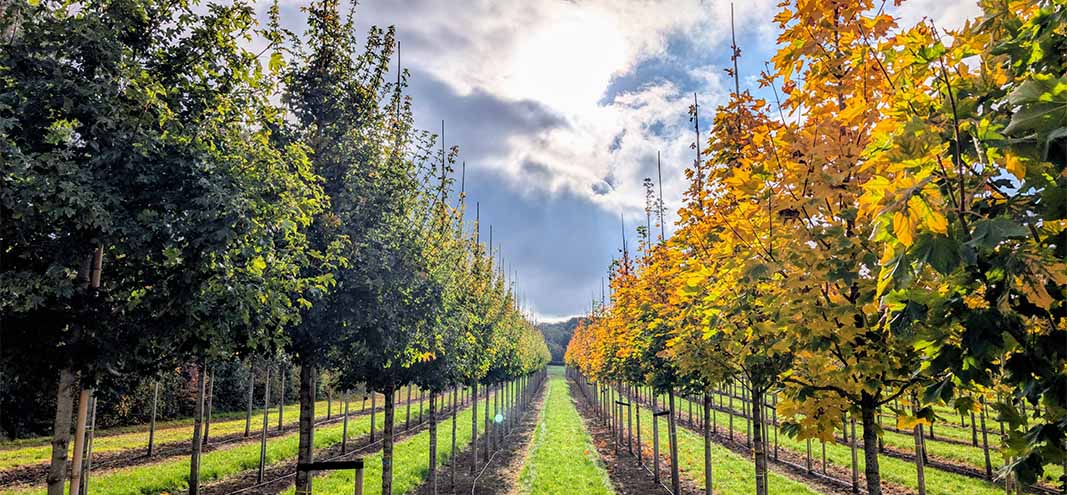
At Hillier, we have long supplied amenity and street trees for urban planting projects across the UK. These trees play a pivotal role in green infrastructure strategies that tackle heat, water, air quality and biodiversity challenges.
- Street trees deliver tangible environmental benefits:
- Shade, reducing urban heat island effects,
- Stormwater interception and runoff control,
- Carbon dioxide absorption and air pollutant filtration,
- Habitat for native fauna,
- Noise buffer and aesthetic appeal.
Our work has featured in high-profile regeneration and street tree renewal projects. See our case studies at Elephant & Castle and Welwyn Garden City.
We frequently collaborate with the Trees and Design Action Group (TDAG), a cross-disciplinary forum advocating for the integral role of trees in planning, design, construction and maintenance of urban places. Their resources, such as Tree Species Selection for Green Infrastructure, underpin thoughtful urban planting practice.
Why Green Infrastructure Matters: The Multi-Benefit Model
Green infrastructure isn’t just pretty, it performs. Across science and city design, evidence supports that vegetation:
- Enhances air quality by moderating pollutant dispersion and acting as a buffer in street canyons.
- Mitigates flood risk and supports sustainable drainage by absorbing and slowing rainfall.
- Bolsters urban cooling via shade and evapotranspiration.
- Strengthens community wellbeing, psychologically and socially, by reconnecting people to nature.
- Supports biodiversity corridors, helping pollinators and wildlife traverse-built environments.
Because of these multiple ecosystem services, planting in the right locations, and with the right species, is crucial.
The Hillier Role & Strategy in Green Infrastructure
- We support local authorities, developers and landscape professionals with tree sourcing, specification, and deployment tailored for green infrastructure projects across Britain.
- In partnership with TDAG and others, we advocate for diverse, resilient species selection, promoting urban forests that thrive long term.
- Our case studies showcase what’s possible when green infrastructure is integrated thoughtfully, not just bolted on later:
Biosecurity: Safeguarding Plant Health & Landscape Resilience
Hillier Nurseries recognises that importation and movement of plant stock pose serious risks to UK horticulture, gardens and the natural environment. Our biosecurity measures go beyond compliance, they are proactive commitments to protect biodiversity, landscape integrity and public confidence.
Our Biosecurity Policy & Approach
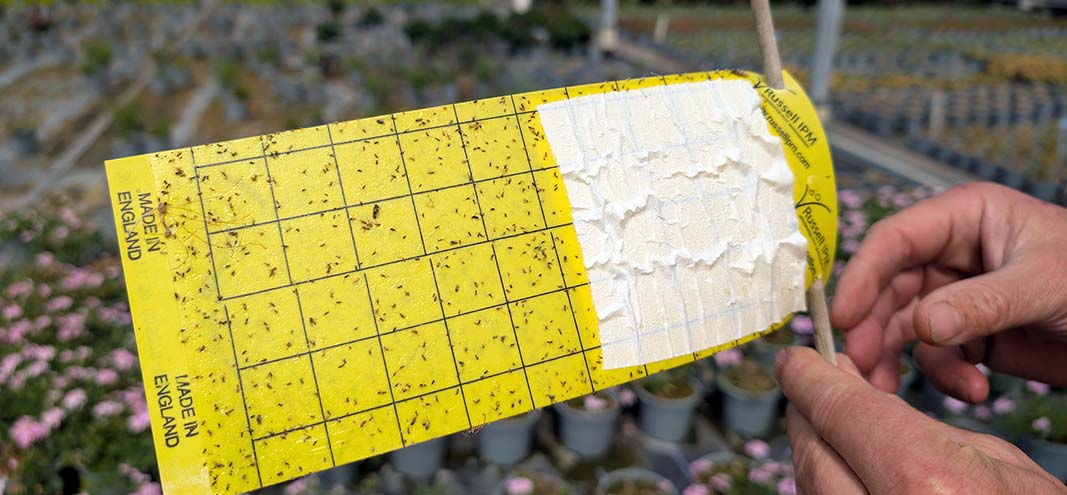
- We maintain an explicit zero-tolerance policy for all notifiable pests, diseases and weeds on imported material: If a stock is found to harbour a regulated threat, it is refused or destroyed.
- All incoming plant stock is reviewed under our Plant Health Assurance programme, with full documentation, inspections and compliance with legal requirements (including plant passports).
- We refuse to import any high-risk genera (e.g. known Xylella hosts) from designated outbreak zones.
- Our growers and suppliers are subject to audits to ensure they meet our standards for hygiene, inspection, traceability and staff training.
- We work closely with industry bodies, plant health authorities, advisers, and the Plant Health Portal to keep abreast of new threats.
These systems help to minimise pathogen introduction risk and maintain confidence in healthy, certified stock.
Threats, Strategy & Wider Context
- Imported pests and diseases, such as Xylella fastidiosa, pose extreme risks to UK landscape and agriculture. While Xylella is not yet established in the UK, it remains a major concern, demanding vigilant import controls.
- The UK’s Plant Biosecurity Strategy 2023–2028 underlines the necessity of government, industry and public collaboration to prevent, manage and respond to plant health threats.
- Post-Brexit regulatory changes have intensified scrutiny of plant imports. New checks, certification requirements and control of quarantine pests (e.g. Popillia japonica, Heterobasidion irregulare) are being introduced.
- In 2025, new legislative measures came into force, tightening import rules and inspections to bolster biosecurity.
Disease-Resistant Trees & Restoration
When prevention is insufficient, we turn to restoration using resilient genetics:
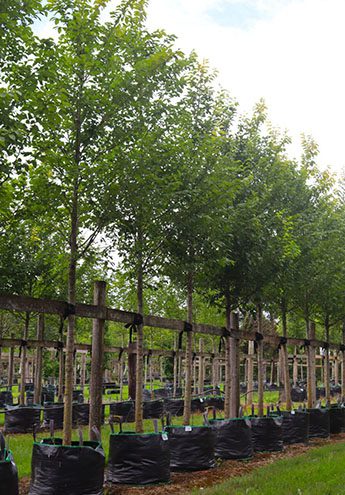
- A flagship example is Ulmus ‘New Horizon’, a disease-resistant elm cultivar developed to resist Dutch Elm Disease (DED). It supports efforts to restore elms in landscapes while maintaining ecological connectivity.
- Each ‘New Horizon’ tree sold by Hillier carries a Certificate of Authenticity, guaranteeing its status as a tested, disease-resilient tree.
- Over decadal timescales, we partner with breeding programmes and international collaborators to develop and deploy resistant tree lineages.
- In 2019, Hillier launched an Elm campaign to reintroduce these trees into British landscapes, promoting their use to landowners, local authorities and gardeners.
 Print This Page
 Bookmark This Page
